
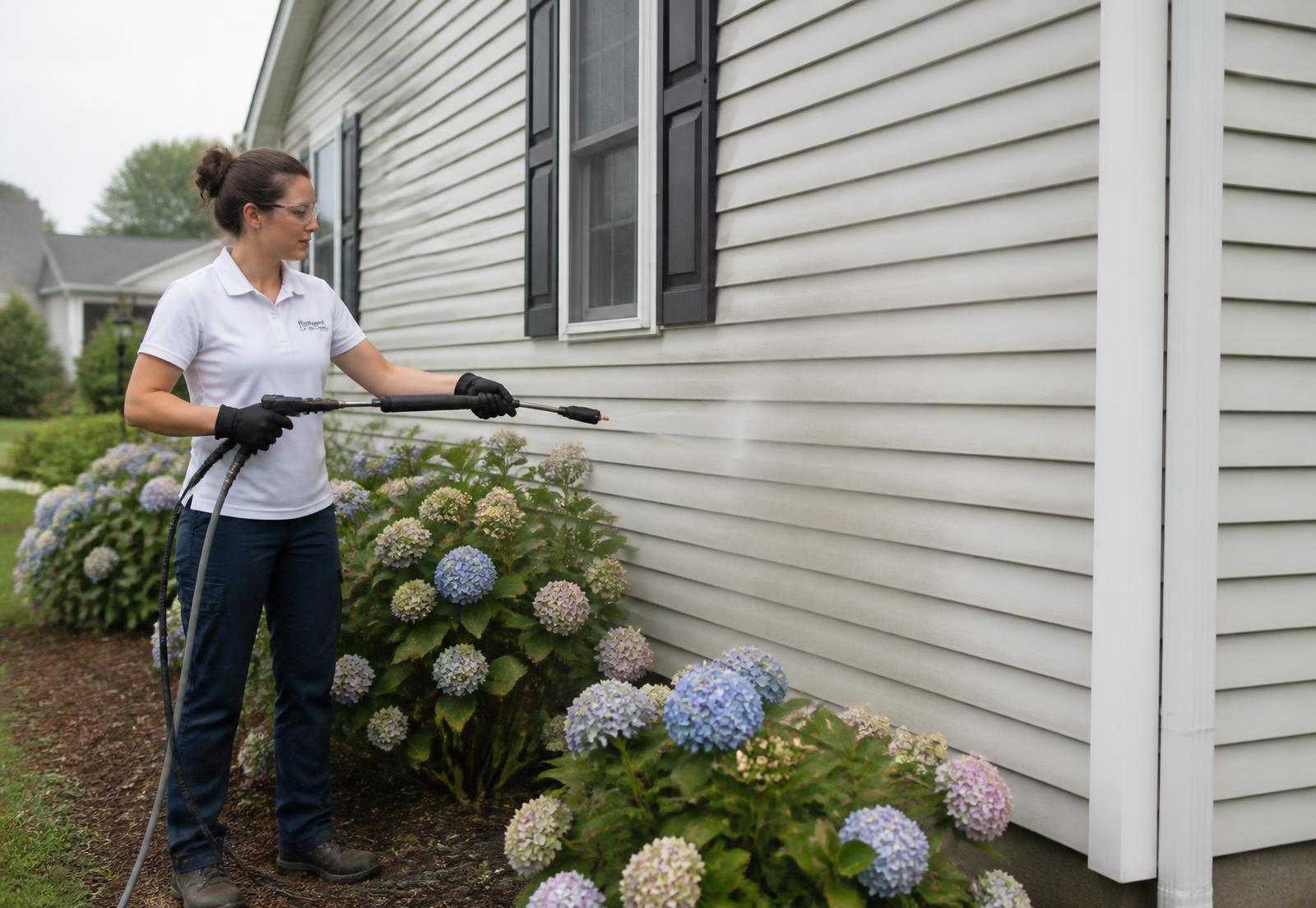
House Washing in Vernon Hills, Illinois
House Washing & Exterior Cleaning

House Wash in Vernon Hills

At Pressure Washing Vernon Hills we use soft washing for delicate areas such as siding, stucco, and roofing, while controlled pressure washing suits durable surfaces like driveways, patios, and some brick. A clean exterior can make your Vernon Hills home look better while helping protect siding, brick, concrete, and other outdoor surfaces from dirt, algae, mold, and mildew.

  • Methods matched to each material
  • Landscaping and fixtures protected
  • Trained, uniformed technicians
  • Transparent, itemized pricing

Request a free quote

Tell us about your property and we'll get back to you with a clear, itemized price.

Prefer to talk? Call (847) 600-4895

Trusted house washing for Vernon Hills homes

Local homes face seasonal moisture, winter residue, and summer buildup, so your cleaning plan should match the material and condition of each surface.

Our exterior cleaning process combines appropriate detergents, commercial-grade equipment, careful property protection, and detailed attention to trim, edges, and corners.

What this service covers

  • Lake County Climate And Seasonal Buildup
  • Common Siding, Roof, And Concrete Contaminants
  • Local Water-Use And Runoff Considerations
  • Soft Washing For Delicate Surfaces
  • Pressure Washing For Concrete And Hardscapes
  • Low-Pressure Rinsing For Vinyl And Painted Exteriors

Methods, Safety, And Expected Results

We match each cleaning method to the surface, soil type, and condition of the property. Our process combines controlled water pressure, appropriate detergents, careful plant and property protection, and a final inspection to produce clean results without unnecessary surface damage.

Soft Washing For Delicate Surfaces

We use soft washing for materials that can crack, etch, or lose their finish under high pressure. This method commonly suits roof shingles, siding, painted trim, stucco, brick, and areas with organic growth such as algae, mold, and mildew.

Soft washing relies on a low-pressure application of water and a surface-appropriate cleaning solution. The detergent loosens and treats contamination, while a controlled rinse removes residue. We avoid directing concentrated spray beneath siding, into roof vents, or toward electrical components.

Before washing, we protect landscaping, outdoor furniture, lighting, and décor. We also inspect corners, trim, seams, and other areas where water could collect. Our technicians adjust the process based on material condition rather than using one pressure setting for the entire property.

Pressure Washing For Concrete And Hardscapes

We use pressure washing for durable, porous surfaces such as concrete driveways, sidewalks, patios, and some masonry hardscapes. These areas often collect tire marks, soil, algae, moss, and deicing residue during Vernon Hills winters.

Surface condition determines the pressure, nozzle, distance, and cleaning pattern. We keep the wand moving to reduce streaking and avoid concentrating water on cracks, damaged joints, or deteriorated concrete. We treat oil and organic staining separately when a detergent can improve removal.

Pressure washing can brighten a hardscape, but it cannot restore severely cracked or spalled concrete. We identify those conditions before cleaning and explain what the process can reasonably improve. Afterward, we rinse surrounding areas and check edges, steps, and transitions for consistent results.

Low-Pressure Rinsing For Vinyl And Painted Exteriors

Vinyl siding and painted exteriors can require more care than their appearance suggests. Excessive pressure may force water behind siding, remove paint, damage caulk, or leave visible marks. We therefore use low-pressure rinsing with controlled spray angles and suitable detergents.

We work from the upper portions downward when the cleaning solution requires that sequence, then rinse thoroughly to prevent residue and streaking. We avoid spraying directly into vents, window seals, soffits, and door hardware. We also account for loose siding, failing paint, and damaged trim before starting.

Our technicians protect nearby plants and fixtures while maintaining enough dwell time for the detergent to loosen surface soil. A final walkthrough helps us check siding seams, window surrounds, trim, and lower sections that often receive splashback from soil and rain.

Biodegradable Detergents And Surface Protection

We select detergents according to the material and contamination rather than applying the strongest available product. Appropriate solutions help loosen organic growth and atmospheric dirt so we can clean effectively with less mechanical force.

We use biodegradable products when suitable and follow label directions for dilution, application, dwell time, and rinsing. We protect vegetation by wetting and shielding plants before service, controlling runoff, and rinsing affected landscaping afterward. We also keep solutions away from sensitive metals, unsealed surfaces, and stored outdoor items.

Our surface-protection process includes moving or covering furniture, checking nearby electrical fixtures, and securing windows and doors. We do not recommend unnecessary sealers or treatments. When a hardscape or other surface could benefit from protection, we explain the expected maintenance value and pricing before proceeding.

Typical Service Frequency And Curb-Appeal Benefits

Many Vernon Hills homes benefit from exterior cleaning every 12 to 24 months , although the right interval depends on shade, tree coverage, moisture, surface material, and nearby traffic. Driveways and walkways may need more frequent cleaning than siding, while roofs require inspection rather than routine high-pressure washing.

We assess the property and create a maintenance plan around its actual conditions. A shaded north-facing wall may develop algae sooner than a sun-exposed elevation, and surfaces near mature landscaping may collect leaves, pollen, and organic debris more quickly.

Regular house washing can improve the appearance of siding, trim, entryways, patios, and hardscapes before hosting, listing, or seasonal maintenance. It also helps remove accumulated soil and organic growth that can contribute to staining. We provide transparent pricing, communicate scheduling details, protect the property during service, and complete a detail-focused final walkthrough.

Vernon Hills Exterior Cleaning Needs

Vernon Hills properties face freeze-thaw cycles, humid summers, tree pollen, and runoff from nearby roads and landscapes. We match each cleaning method to the material, using pressure washing for durable surfaces and soft washing for siding, roofs, and other areas that could suffer damage from excessive force.

Lake County Climate And Seasonal Buildup

Lake County’s weather creates several predictable cleaning patterns. Spring rain and rising temperatures encourage algae, mildew, and pollen to collect on siding, decks, fences, and shaded concrete. Summer humidity can keep north-facing walls and areas beneath trees damp, while falling leaves add organic staining to gutters, patios, and roof surfaces.

Winter introduces salt residue, ice-melt products, and repeated freezing and thawing. These conditions can push water into small cracks in concrete and worsen existing surface wear. We typically schedule house washing in late spring or early fall, then address concrete, decks, and other high-use areas according to their condition.

Our technicians inspect shaded elevations, trim, roof edges, and drainage paths before cleaning. This detail-focused approach helps us choose the right pressure, detergent, dwell time, and rinse pattern for each part of the property.

Common Siding, Roof, And Concrete Contaminants

Vinyl and fiber-cement siding commonly collect dust, pollen, algae, mildew, and spider webs around soffits, windows, and shaded corners. We generally use soft washing for these surfaces: a low-pressure application of appropriate cleaning solutions followed by a controlled rinse. This removes organic growth without forcing water behind siding or damaging finishes.

Asphalt shingles can develop black streaks caused by moisture-related algae. Roof cleaning requires low pressure and careful runoff control; high-pressure cleaning can dislodge granules and shorten shingle life. We also protect landscaping, exterior fixtures, and nearby surfaces before work begins.

Driveways, walkways, patios, and garage aprons often show tire marks, oil spots, rust, leaf tannins, algae, and winter salt deposits. We use pressure washing where the material can withstand it, adjusting pressure and nozzle selection for poured concrete, pavers, brick, and decorative coatings.

Local Water-Use And Runoff Considerations

Exterior cleaning uses water responsibly when technicians control overspray, equipment settings, and rinse time. We protect storm drains and direct wash water away from neighboring properties, planted areas, open windows, and vulnerable finishes. Cleaning solutions should never enter waterways or flow unchecked into drainage systems.

Before starting, we review downspout discharge, slope, landscaping, outdoor outlets, and nearby ponds or drainage features. We also move or cover furniture, planters, lighting, and décor as needed. Our team uses surface-appropriate methods that reduce unnecessary water use while maintaining effective results.

Homeowners should confirm that gates are accessible and that pets, toys, and fragile items are indoors. We provide transparent recommendations based on the property’s materials and buildup, without adding unnecessary services.

Answers

Frequently Asked Questions

A professional house wash in Vernon Hills should match the cleaning method to each exterior material, account for local moisture and winter salt, and include careful protection for landscaping and property features. Costs depend on house size, siding condition, access, and the scope of exterior cleaning.

What does a professional exterior house wash typically include?

We typically inspect the siding, trim, soffits, fascia, gutters, exterior doors, and accessible foundation areas before selecting the appropriate cleaning method. We also identify oxidation, algae, mildew, insect debris, hard-water marks, and salt residue from winter conditions.

Our service includes protecting plants, outdoor furniture, lighting, decorations, and delicate surfaces. After cleaning, we check corners, edges, trim, and areas beneath overhangs, then complete a walkthrough to address missed spots.

What is the difference between soft washing and pressure washing for residential siding?

Soft washing uses low water pressure with a cleaning solution designed to loosen organic growth and surface grime. We commonly use it for vinyl siding, painted surfaces, stucco, roofs, and other materials that could suffer damage from concentrated pressure.

Pressure washing uses higher water pressure to remove more durable buildup from suitable surfaces such as concrete driveways, walkways, and some masonry. We adjust pressure, nozzle selection, distance, and cleaning agents to reduce the risk of etching, water intrusion, or surface damage.

How much does it typically cost to wash a 2,000-square-foot house in Vernon Hills?

A 2,000-square-foot house wash in Vernon Hills commonly costs about $250 to $600 , depending on the siding material, number of stories, access, soil level, and whether the service includes trim, gutters, soffits, or exterior fixtures.

Heavy algae or mildew, extensive landscaping protection, difficult access, and additional services can increase the price. We provide transparent quotes after reviewing the property so homeowners know what the service includes before work begins.

Which exterior surfaces should be soft washed instead of pressure washed?

We generally soft wash vinyl siding, painted wood, stucco, manufactured stone, exterior insulation finishing systems, and roof shingles . These surfaces can crack, strip paint, force water behind siding, or lose protective granules when cleaned with excessive pressure.

We use pressure washing for durable surfaces such as concrete, some brick, and certain pavers when their condition allows it. We inspect the material first and choose a method that removes buildup without damaging the surface.

How often should homeowners in Vernon Hills clean siding, gutters, and exterior surfaces?

Many Vernon Hills homes benefit from a professional siding wash every one to two years . Homes shaded by trees, near ponds, or exposed to persistent moisture may need more frequent cleaning because algae, mildew, and organic debris develop faster.

We recommend cleaning gutters at least twice a year , typically in spring and fall, and checking them after major storms. Driveways, walkways, patios, and decks often need cleaning every one to three years , depending on traffic, staining, shade, and winter salt exposure.

Can pressure washing safely remove algae, mold, mildew, and salt residue from a home’s exterior?

We can remove many types of algae, mold, mildew, dirt, and salt residue when we use the correct solution and equipment for the surface. For siding and other delicate materials, soft washing usually provides safer treatment than high-pressure cleaning.

We do not treat every stain as removable. Rust, deep oxidation, permanent discoloration, damaged coatings, and old paint may require specialized restoration or repairs, which we identify during the property inspection.

Driveway Cleaning

Ready for house washing in Vernon Hills?

Clear pricing, trained technicians, and careful property protection.

(847) 600-4895