
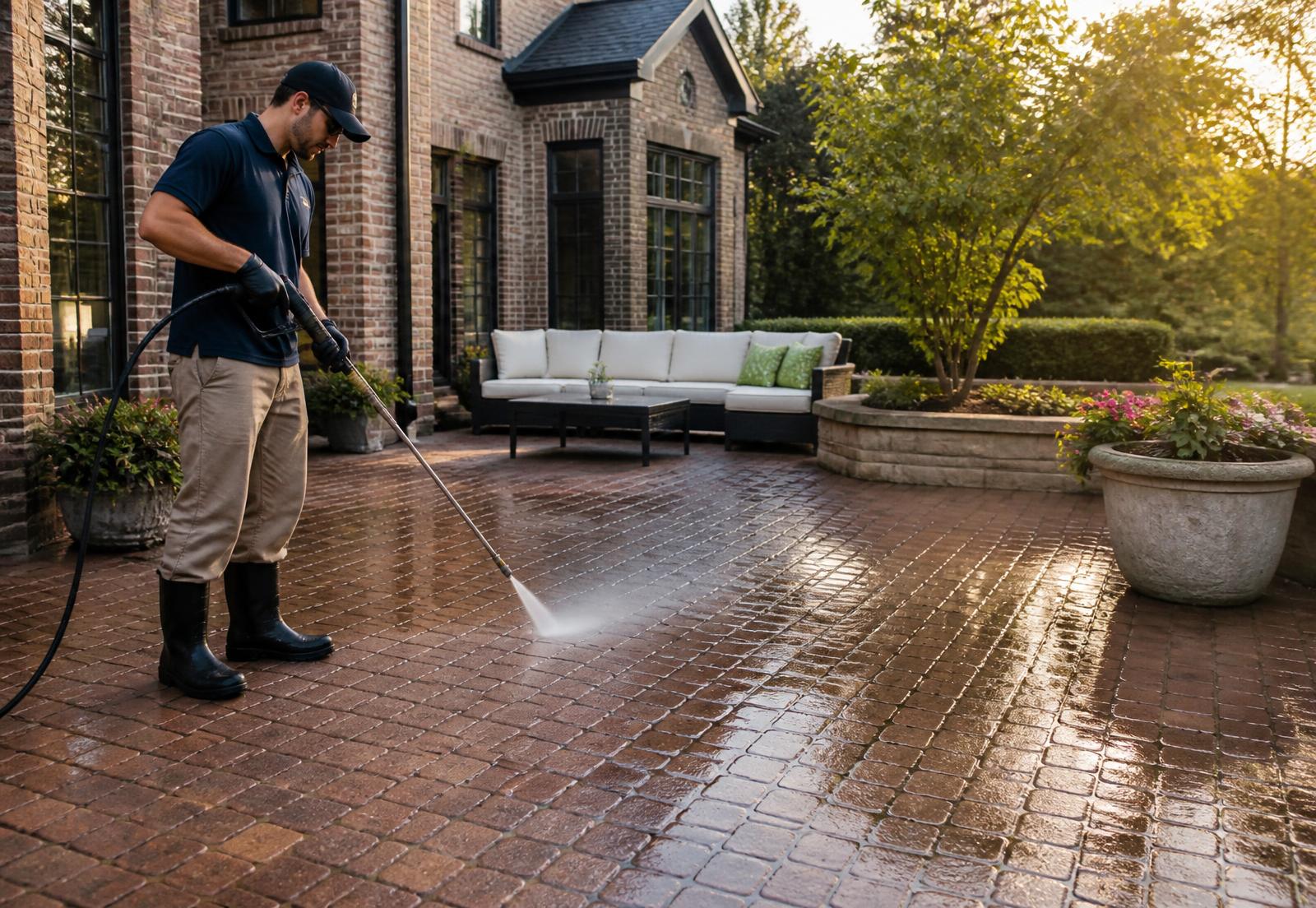
Deck & Fence Cleaning in Vernon Hills, Illinois
Deck & Fence Cleaning & Exterior Cleaning

Deck & Fence Cleaning in Vernon Hills

At Pressure Washing Vernon Hills we match each surface with the right cleaning method (high-pressure washing for durable materials, low-pressure cleaning for sensitive areas, and soft washing for wood, siding, and organic growth) to clean effectively without unnecessary damage. Deck and fence cleaning in Vernon Hills helps remove dirt, algae, mildew, weathering, and stains before they shorten the life of wood, composite, or vinyl surfaces.

  • Methods matched to each material
  • Landscaping and fixtures protected
  • Trained, uniformed technicians
  • Transparent, itemized pricing

Request a free quote

Tell us about your property and we'll get back to you with a clear, itemized price.

Prefer to talk? Call (847) 600-4895

Trusted deck & fence cleaning for Vernon Hills homes

Seasonal moisture and changing temperatures can make routine exterior cleaning important, especially from late spring through early fall.

We assess the surface first, protect landscaping and outdoor furnishings, and use detailed techniques around edges, trim, fasteners, and corners. Our Vernon Hills maintenance approach focuses on careful cleaning, surface protection, and practical scheduling.

What this service covers

  • Wood, Composite, Vinyl, And Masonry Care
  • Pressure Washing, Soft Washing, And Exterior Rinsing
  • PSI Ranges And Detergent Selection
  • Lake County Weather And Seasonal Buildup
  • Runoff Control And EPA-Safer Practices
  • Sealing, Staining, And Cleaning Frequency

Surface Assessment And Cleaning Methods

We assess each deck and fence before cleaning to identify material, coating condition, organic growth, loose boards, fasteners, and nearby delicate surfaces. That inspection determines the cleaning method, water pressure, detergent, rinse pattern, and protection required for the property.

Wood, Composite, Vinyl, And Masonry Care

We clean wood decks and fences with controlled pressure and appropriate detergents. Excessive pressure can raise wood grain, damage softer boards, strip sound coatings, or force water beneath trim. We take extra care around end grain, railings, stairs, lattice, and older weathered surfaces.

Composite decking usually needs lower pressure and a manufacturer-compatible cleaner. Aggressive washing can mark the surface or drive debris into its texture. Vinyl fencing responds well to low-pressure detergent application followed by a thorough rinse, while masonry patios and retaining walls may require stronger rinsing to remove embedded soil, algae, and tire or rust stains.

We protect landscaping, furniture, lighting, décor, siding, and nearby doors before work begins. Our technicians also inspect edges, corners, fasteners, and transitions so the finished cleaning does not overlook visible detail.

Pressure Washing, Soft Washing, And Exterior Rinsing

Pressure washing uses pressurized water to remove dirt, stains, loose coatings, and surface debris. We adjust the pressure and nozzle distance to match the material rather than treating every deck or fence the same way.

Soft washing combines low-pressure application with a suitable detergent. The cleaning solution loosens organic growth such as algae, mildew, and surface biofilm, while the lower pressure reduces the risk of damage to painted wood, vinyl, screens, siding, and delicate trim.

Exterior rinsing completes the process by removing loosened soil and detergent residue. We work methodically from protected areas toward drainage points, control overspray, and check runoff near gardens and hardscape. In Vernon Hills, seasonal moisture and shaded areas can encourage recurring growth, so we may recommend a maintenance schedule based on exposure and surface condition.

PSI Ranges And Detergent Selection

Pressure settings vary by equipment, nozzle, distance, material, and surface condition. As a practical starting point, we may use approximately 500–1,200 PSI for weathered wood , 800–1,500 PSI for composite materials , 1,000–1,500 PSI for vinyl , and 2,000–3,000 PSI for sound concrete or masonry . We lower these ranges when coatings, joints, or fragile areas require greater protection.

PSI alone does not determine cleaning power. Nozzle angle, water flow, dwell time, and technician control matter just as much. We test an inconspicuous area before proceeding and avoid concentrating spray on seams or damaged boards.

We select detergents according to the contaminant and material. Mild surfactants can loosen soil, while targeted treatments address algae or mildew. We follow product directions, protect plants with suitable measures, and rinse thoroughly so no residue remains.

Vernon Hills Maintenance And Protection

Vernon Hills properties need maintenance that accounts for freeze-thaw cycles, summer humidity, tree debris, and moisture near Lake County drainage areas. We use surface-appropriate cleaning, runoff controls, and planned sealing or staining to protect wood, composite materials, concrete, landscaping, and nearby structures.

Lake County Weather And Seasonal Buildup

Vernon Hills experiences cold winters, spring rain, humid summers, and regular temperature changes that can stress outdoor surfaces. Moisture trapped beneath leaves or furniture encourages algae, mildew, and organic staining, while freeze-thaw movement can worsen cracks in wood, concrete, and masonry.

We typically inspect decks and fences in spring for winter damage and remove buildup before it spreads. Soft washing uses lower pressure with an appropriate cleaning solution for painted wood, vinyl, and delicate areas. Controlled pressure washing works better for durable concrete and heavily soiled surfaces, while composite decking requires manufacturer-compatible methods.

We also check corners, stair stringers, fence bottoms, railings, and shaded areas where buildup remains unnoticed. Our technicians protect outdoor furniture, lighting, plants, and décor before cleaning, then complete a detailed walkthrough after the work.

Runoff Control And EPA-Safer Practices

Cleaning solutions and loosened debris should not flow freely into storm drains, gardens, ponds, or neighboring properties. We protect nearby landscaping, direct wastewater responsibly, and use measured applications rather than applying more chemical than the surface requires.

Our approach favors EPA-safer cleaning products and low-pressure methods when they can achieve the required result. We pre-rinse vegetation, cover sensitive items, control overspray, and collect or redirect runoff where site conditions call for it. These steps help reduce risks to ornamental plants, pets, and aquatic environments.

Different surfaces require different treatment. High pressure may damage soft wood, strip finishes, or force water behind siding. We select pressure, nozzle distance, temperature, and detergent based on the material and contamination, then document any pre-existing damage before work begins.

Sealing, Staining, And Cleaning Frequency

Cleaning removes surface contamination, but sealing or staining helps limit future moisture absorption and ultraviolet damage. We recommend allowing wood to dry fully after cleaning before applying a compatible coating, and we consider the deck’s orientation, shade, foot traffic, and existing finish.

Many Vernon Hills homeowners schedule deck and fence cleaning annually, with an additional inspection after severe weather or heavy seasonal buildup. A maintenance plan may include spring cleaning, spot treatment during the growing season, and fall debris removal. Concrete often benefits from periodic cleaning and sealing when its condition and prior coating support it.

We provide transparent recommendations instead of automatic upsells. Our trained technicians explain whether a surface needs cleaning, light preparation, staining, sealing, or repair, and we protect the property throughout the process.

Answers

Frequently Asked Questions

In Vernon Hills, cleaning costs depend on surface size, material, staining, access, and whether the project includes sealing or repairs. We match pressure, detergents, and runoff controls to each surface so wood, vinyl, composite materials, and nearby landscaping receive appropriate protection.

How much does professional deck and fence cleaning typically cost in Vernon Hills, Illinois?

Professional deck and fence cleaning in Vernon Hills commonly costs about $250–$800 for a typical residential project . Larger properties, multi-level decks, extensive fencing, heavy algae, difficult access, and post-cleaning sealing can raise the price.

We provide itemized estimates that identify cleaning, stain removal, sanding, brightening, sealing, and repairs separately. This approach avoids hidden fees and prevents unnecessary upsells.

Is soft washing or pressure washing safer for wood decks, vinyl fences, and composite decking?

Soft washing is generally safer for weathered wood, vinyl fencing, and composite decking because it uses lower pressure with a suitable detergent. The solution loosens organic growth, while controlled rinsing removes residue without forcing water into joints or damaging the surface.

We may use moderate pressure on sound pressure-treated lumber or heavily soiled composite boards, but we avoid holding the nozzle close to the material. High pressure can etch wood, strip protective coatings, scar vinyl, and drive water beneath composite edges.

What PSI and cleaning method are appropriate for cedar, pressure-treated lumber, and Trex-style composite decks?

For cedar, we typically use roughly 500–800 PSI , a wide fan tip, and consistent movement along the grain. Soft, aged, or previously damaged cedar may require less pressure and more detergent dwell time.

Sound pressure-treated lumber often tolerates approximately 800–1,200 PSI , depending on its condition and coating. Trex-style composite decking usually benefits from low to moderate pressure, commonly under 1,500 PSI , with the manufacturer’s care instructions taking priority.

We test an inconspicuous area before cleaning the full surface. We also avoid concentrated turbo nozzles on decking because they can leave visible circular marks.

Which cleaners effectively remove mold, algae, mildew, and gray weathering from exterior wood surfaces?

For mold, algae, and mildew, we use appropriately diluted detergents containing sodium hypochlorite or other surface-safe biocides, followed by thorough rinsing. We control concentration and dwell time according to the material, weather, and level of growth.

Gray weathering usually results from ultraviolet exposure and surface oxidation rather than biological growth. A wood brightener containing oxalic or citric acid can help restore a more uniform appearance after cleaning, but it cannot reverse deep structural decay.

We protect plants, outdoor furniture, lighting, and decorative features before applying cleaners. We also rinse landscaping and direct runoff away from storm drains whenever practical.

How often should homeowners in Lake County clean and seal a deck or fence to prevent moisture damage?

Many Lake County homeowners benefit from cleaning decks and fences once each year , usually in spring or early summer. Properties shaded by trees, exposed to persistent moisture, or affected by algae may need more frequent cleaning.

Wood commonly needs resealing every two to three years , although horizontal decks may require it sooner than vertical fences. We assess water absorption, color loss, peeling, and exposed fibers rather than relying only on a fixed schedule.

Regular cleaning and sealing helps limit moisture entry, but it cannot correct loose boards, failed fasteners, or structural deterioration. We identify those conditions during the inspection and recommend repairs separately.

Can pressure washing remove rust stains, tannin bleed, and green algae without damaging nearby landscaping?

We can often remove green algae with a controlled soft-wash treatment and low-pressure rinse. Rust stains usually require an oxalic-acid or other specialized rust remover, while tannin bleed from cedar, oak leaves, or other wood sources may respond to an oxalic-acid brightener.

We shield plants with covers where appropriate, pre-wet and rinse vegetation, and keep chemical runoff under control. We also adjust the treatment when delicate landscaping, ponds, outdoor lighting, or painted surfaces sit near the deck or fence.

Pressure alone rarely provides the safest or cleanest result for these stains. We combine targeted chemistry, suitable dwell time, and material-specific rinsing to reduce the risk of etching, discoloration, or plant damage.

Gutter Cleaning

Ready for deck & fence cleaning in Vernon Hills?

Clear pricing, trained technicians, and careful property protection.

(847) 600-4895