
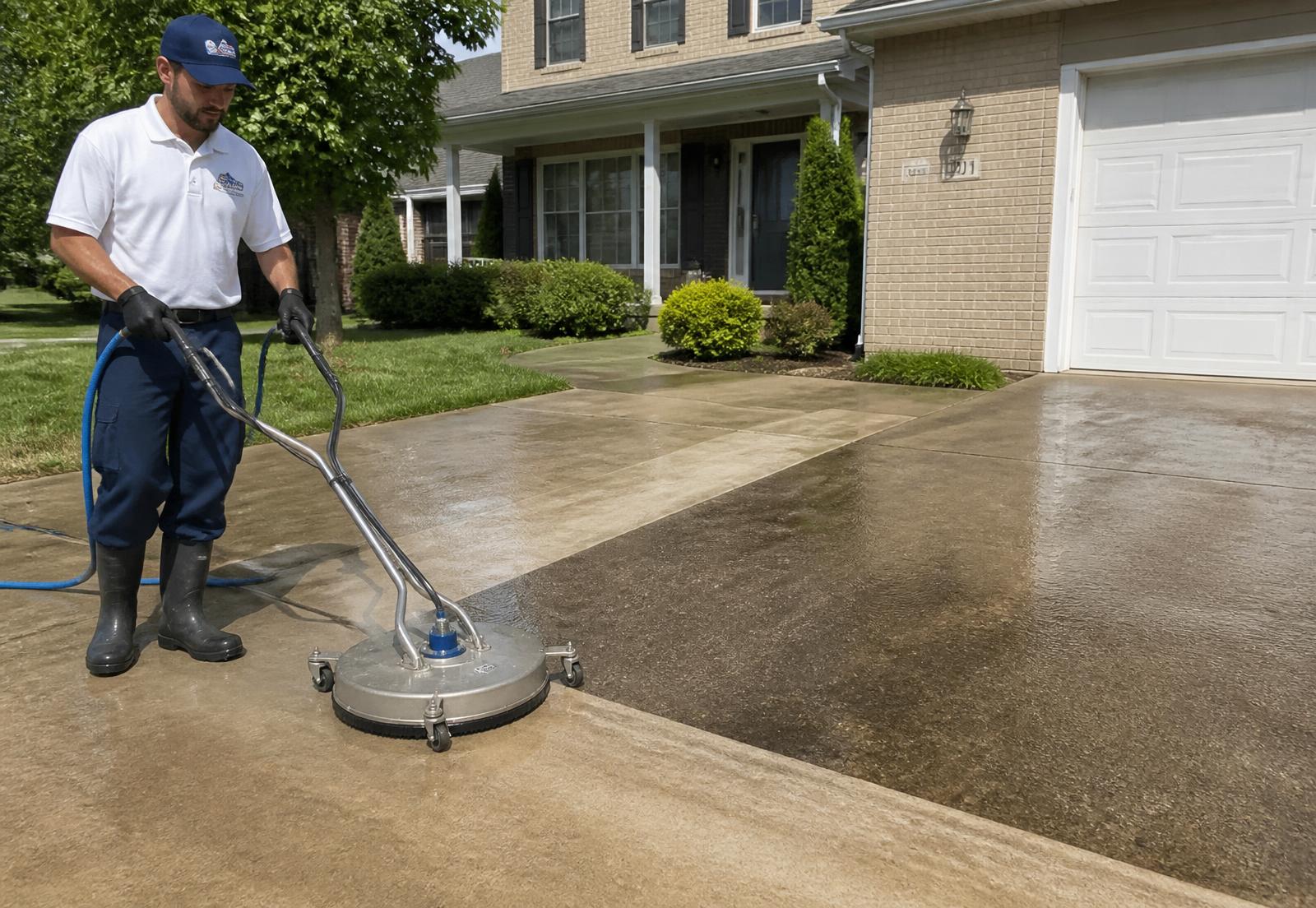
Driveway Cleaning in Vernon Hills, Illinois
Driveway Cleaning & Exterior Cleaning

Driveway Cleaning in Vernon Hills

At Pressure Washing Vernon Hills we match water pressure, cleaning solutions, and equipment to your driveway material, using high pressure for durable concrete when appropriate and soft washing for delicate or vulnerable surfaces. Driveway cleaning in Vernon Hills removes dirt, algae, oil, salt residue, and weather-related staining that can make concrete, pavers, and asphalt look worn.

  • Methods matched to each material
  • Landscaping and fixtures protected
  • Trained, uniformed technicians
  • Transparent, itemized pricing

Request a free quote

Tell us about your property and we'll get back to you with a clear, itemized price.

Prefer to talk? Call (847) 600-4895

Trusted driveway cleaning for Vernon Hills homes

Lake County’s freeze-thaw cycles and seasonal moisture can worsen surface buildup, so the right cleaning method matters.

Our surface protection approach also covers nearby landscaping, lighting, furniture, and decorative features while we inspect edges and corners for overlooked grime.

What this service covers

  • Concrete, Asphalt, Pavers, And Aggregate Considerations
  • Pressure Washing Versus Soft Washing
  • Oil Stain, Tire Mark, Algae, And Salt Residue Removal
  • Lake County Freeze-Thaw Cycles And Deicing Salt
  • Water Runoff, Detergent Selection, And Storm Drain Protection
  • Sealing, Maintenance Intervals, And Curb Appeal Benefits

Driveway Surface Care And Cleaning Methods

Vernon Hills driveways face freeze-thaw cycles, road salt, rain, vehicle traffic, and organic growth. We match the cleaning method to the surface and stain so we can remove buildup without damaging concrete, asphalt, pavers, or landscaping.

Concrete, Asphalt, Pavers, And Aggregate Considerations

Concrete generally tolerates controlled pressure, but excessive force can etch the surface, expose aggregate, or remove a sealer. We pre-treat stains, keep the nozzle moving, and adjust pressure near expansion joints and decorative finishes.

Asphalt requires greater care because aggressive pressure can loosen surface material and worsen cracks. We use lower pressure, suitable detergents, and avoid directing water into damaged edges. Cleaning should occur before asphalt sealing so the surface can dry properly.

Pavers need consistent technique to avoid dislodging joint sand. We clean at an appropriate distance, protect nearby beds, and inspect joints before recommending sanding or sealing. For exposed aggregate, we reduce pressure around weak areas and test a small section first.

Pressure Washing Versus Soft Washing

Pressure washing uses mechanical force to remove embedded dirt, tire marks, and surface residue from durable materials. We use surface cleaners and controlled rinsing on sound concrete, while varying pressure around cracks, joints, coatings, and aged areas.

Soft washing relies more on cleaning solutions and low-pressure rinsing than on force. This approach suits delicate surfaces, nearby landscaping, and organic growth such as algae or moss. It can also help loosen biological staining before a lower-pressure rinse.

We select the method after checking the driveway’s material, age, drainage, condition, and surrounding features. Our technicians protect plants, lighting, furniture, and décor, then complete a detail-focused inspection of edges and corners.

Oil Stain, Tire Mark, Algae, And Salt Residue Removal

Oil stains often require a degreaser and dwell time before rinsing. We treat the affected area rather than relying on water pressure alone. Older stains may lighten substantially without disappearing completely, especially when oil has penetrated porous concrete.

Tire marks respond to targeted cleaning and controlled agitation. Algae and other organic growth may need a detergent-based treatment followed by a low-pressure rinse, particularly where a slippery film has developed.

Winter salt residue can leave white deposits and contribute to surface deterioration when it remains trapped in porous materials. We rinse thoroughly, manage runoff responsibly, and check nearby drains. We also identify cracks, loose joints, and failing sealers so homeowners can address maintenance issues before they expand.

Vernon Hills Conditions, Safety, And Service Planning

Vernon Hills properties face freeze-thaw damage, winter deicing residue, and runoff concerns that affect driveway cleaning decisions. We match pressure washing, soft washing, detergents, surface protection, and scheduling to the driveway material and site conditions.

Lake County Freeze-Thaw Cycles And Deicing Salt

Lake County winters expose concrete and asphalt driveways to repeated freezing and thawing. Water enters small cracks, expands when frozen, and can widen those openings; deicing salt may accelerate surface scaling on concrete and corrode nearby metal edging or garage-door components.

We first inspect cracks, spalling, loose aggregate, settled sections, and drainage patterns. High-pressure cleaning is not suitable for every damaged surface. We reduce pressure near exposed aggregate, deteriorated joints, and asphalt edges, while soft washing can remove organic growth from adjacent siding, retaining walls, or pavers with less mechanical force.

Spring cleaning removes salt residue, winter grime, and embedded soil before those contaminants remain on the surface. We protect landscaping, lighting, furniture, and décor, then complete a detail-focused walkthrough around garage thresholds, corners, and expansion joints.

Water Runoff, Detergent Selection, And Storm Drain Protection

Driveway runoff can carry sediment, oil, detergent, and salt toward inlets connected to Vernon Hills’ drainage system. We plan hose placement and cleaning direction so wastewater does not flow unnecessarily into a storm drain, neighboring property, or landscaped bed.

We select detergents according to the contamination and material. A concrete driveway may need a controlled degreaser for vehicle fluids, while pavers with algae or organic staining may respond better to a low-pressure soft-wash treatment. We avoid mixing chemicals and never use stronger products than the surface requires.

Before washing, we identify nearby drains, downspouts, wells, gardens, and low areas. We use containment or recovery methods when site conditions require them, and we rinse responsibly. Our trained technicians explain any limitations, provide transparent pricing, and avoid unnecessary chemical upsells.

Sealing, Maintenance Intervals, And Curb Appeal Benefits

Cleaning does not repair structural cracks or replace failed joints, but it helps reveal conditions that need attention before sealing. We recommend repairs first when water can enter open cracks, and we allow the surface to dry fully before applying a compatible sealer.

Concrete, asphalt, and pavers require different products and preparation. Sealing can help limit moisture and staining, but the correct interval depends on traffic, shade, drainage, winter salt exposure, and the manufacturer’s requirements. We do not promise a fixed lifespan for every driveway.

Many homeowners schedule a detailed cleaning in spring and a lighter service before winter. Regular maintenance keeps edges, walkways, and entry areas presentable while reducing heavy buildup. Our white-glove process includes surface protection, punctual communication, careful finishing work, and a final inspection focused on lasting property care.

Answers

Frequently Asked Questions

Driveway cleaning in Vernon Hills requires appropriate pressure, runoff control, and stain treatment for concrete or pavers. Costs, cleaning frequency, equipment settings, and local requirements vary with driveway size, surface condition, drainage, and the type of contamination.

How much does professional driveway pressure washing typically cost in Vernon Hills, Illinois?

Professional driveway cleaning in Vernon Hills commonly costs about $150 to $400 for a standard residential driveway. Larger driveways, extensive algae growth, oil contamination, multiple surfaces, difficult access, and paver re-sanding can increase the price.

We provide transparent pricing after evaluating the surface, drainage, stains, and surrounding landscaping. Our quote should identify included services, such as pretreatment, surface cleaning, edge detailing, stain treatment, and post-cleaning rinsing.

Is pressure washing a driveway permitted under Vernon Hills and Lake County stormwater runoff rules?

Pressure washing is not automatically prohibited, but wastewater should not flow untreated into storm drains, streams, wetlands, or other waterways. Vernon Hills operates within Lake County’s stormwater system, so local requirements may address sediment, detergents, pollutants, and discharge pathways.

We protect nearby inlets, direct wastewater toward appropriate landscaped or sanitary-discharge locations when permitted, and avoid releasing oil, detergent, or sediment into the street. Property owners should confirm current requirements with the Village of Vernon Hills Public Works Department or Lake County Stormwater Management Commission , especially for commercial properties or work near sensitive drainage areas.

What is the difference between pressure washing, power washing, and soft washing for concrete driveways?

Pressure washing uses pressurized water to remove dirt, algae, and surface buildup. Power washing generally refers to pressure washing with heated water, which can help loosen grease and oil but may damage some sealers or joint materials if used incorrectly.

Soft washing combines low water pressure with a cleaning solution and dwell time. We may use soft washing for organic growth near landscaping, delicate pavers, or areas where high pressure could cause surface damage, followed by controlled rinsing.

For sound concrete, we typically use a commercial surface cleaner and moderate pressure rather than a narrow, aggressive nozzle. We adjust the method for broom-finished concrete, exposed aggregate, stamped concrete, clay pavers, concrete pavers, and sealed surfaces.

What PSI and surface-cleaner equipment are best for removing dirt, algae, and tire marks from a driveway?

There is no single safe PSI for every driveway. We often clean residential concrete within roughly 2,500 to 3,500 PSI , adjusting pressure, nozzle type, water flow, distance, and travel speed according to the concrete’s age and condition.

A commercial 16- to 20-inch surface cleaner helps produce an even result and reduces zebra striping compared with a handheld wand. We use lower pressure for deteriorated concrete, pavers, coatings, and areas near expansion joints, while pretreatment helps remove algae without relying on excessive water pressure.

Tire marks may respond to an alkaline degreaser and hot water. We test products in an inconspicuous area first, protect nearby plants, and rinse thoroughly.

Can exterior cleaning remove oil stains, rust spots, and de-icing salt residue from concrete or pavers?

Exterior cleaning can improve these stains, but results depend on how long the contamination has penetrated the material. Oil usually requires a concrete-safe degreaser, agitation, dwell time, and hot-water rinsing; one pass may not remove an old stain completely.

Rust requires a suitable acid-free or manufacturer-approved rust remover for the specific surface. Strong acids can etch concrete, damage pavers, harm vegetation, and affect joint sand, so we avoid using them indiscriminately.

De-icing salt residue is generally treated with thorough rinsing and appropriate detergents. White scaling or spalling may indicate freeze-thaw or salt damage rather than removable dirt, and cleaning cannot restore concrete that has already deteriorated.

How often should a driveway be professionally cleaned in Vernon Hills’ freeze-thaw climate?

Many Vernon Hills driveways benefit from professional cleaning once each year , commonly in late spring after winter salt and soil have been removed. Driveways shaded by trees, exposed to frequent vehicle traffic, or affected by algae may need cleaning every six to nine months.

We inspect for cracks, spalling, loose pavers, failing joint sand, and damaged sealers before cleaning. Regular maintenance removes contaminants without repeatedly using excessive pressure, helping protect the surface through Lake County’s freeze-thaw cycles.

Patio & Paver Restoration

Ready for driveway cleaning in Vernon Hills?

Clear pricing, trained technicians, and careful property protection.

(847) 600-4895